
Written from the perspective of Jared Feder, founder of REL8TION and mortgage professional since 1998.
An open house sign-in system has one job that matters more than collecting names: it should help an agent begin a useful, permission-based relationship without making the visitor uncomfortable.
Paper sheets, tablet kiosks, QR codes, and NFC systems can all collect information. The real differences appear in the visitor experience, follow-up speed, data quality, financing support, and what happens after the event.
Paper open house sign-in sheets
Paper is familiar and requires no setup, but handwriting can be unreadable, visitors can see each other’s information, and follow-up requires manual entry. A piece of paper cannot validate a phone number, send property information, alert the agent, or create an organized next step.
Tablet and app-based sign-in
A tablet kiosk can create a polished form and keep information private from the next visitor. The tradeoff is that the agent must provide, charge, secure, and position a shared device. A dedicated application may also require installation, an account, or training before the event.
QR-code check-in
A QR code lets visitors use their own phones and can open a web form without an app. It is inexpensive and familiar. However, visitors must open the camera, frame the code, follow the link, and complete the form. At a busy doorway or in poor lighting, those extra steps can add friction.
NFC tap-to-check-in
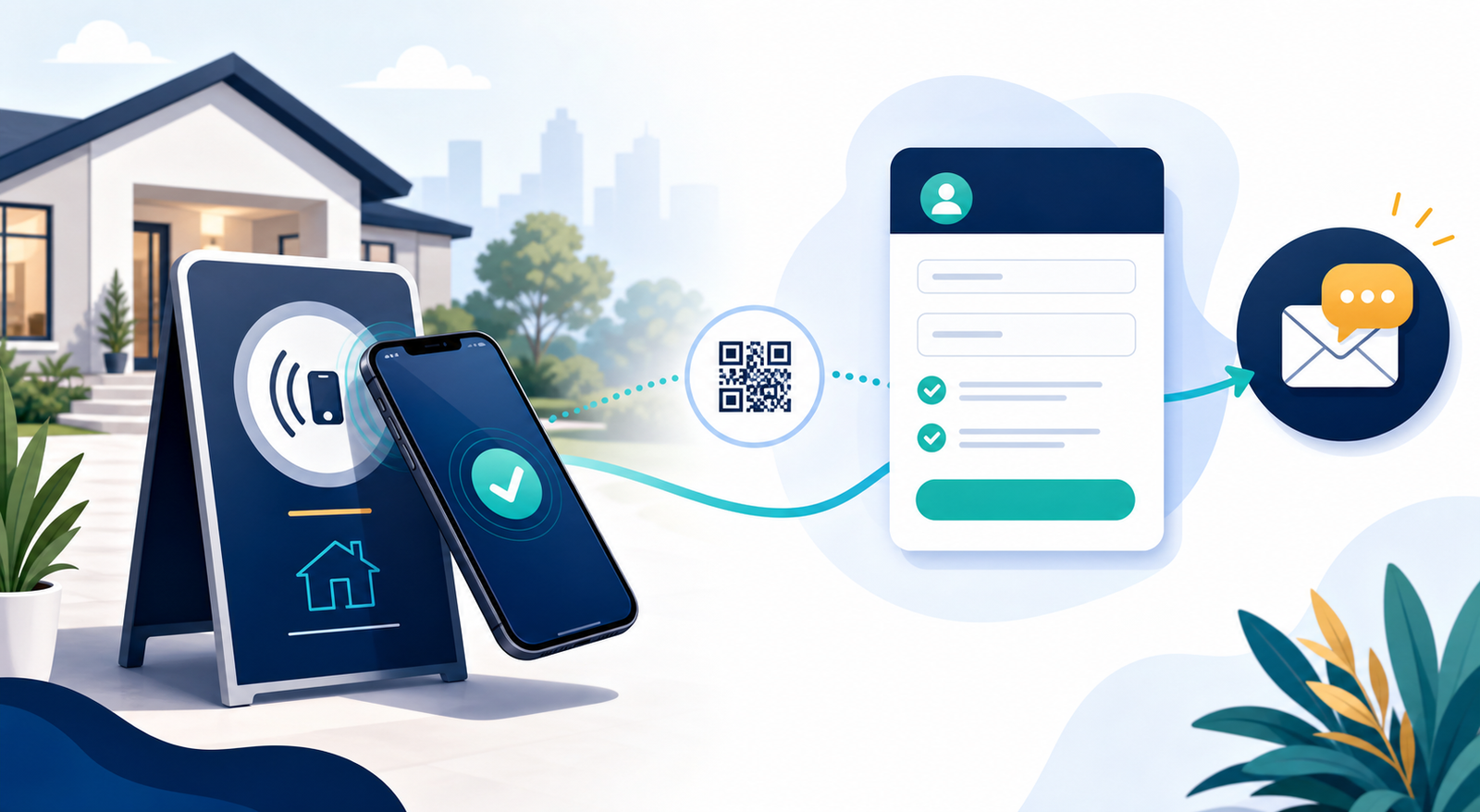
NFC allows a visitor to hold a compatible phone near a physical sign or tag and open a mobile experience. It can reduce the interaction to one physical gesture. A good implementation should also provide a QR fallback for devices or visitors that cannot use NFC.
What should agents compare?
- Visitor friction: Does the guest need an app, password, shared tablet, or account?
- Privacy: Can visitors avoid exposing personal or financing information in front of strangers?
- Consent: Does the experience clearly explain text or email follow-up and capture appropriate permission?
- Speed: Can the agent respond while the property and conversation are still fresh?
- Data quality: Are phone numbers, preferences, and agent status collected in a structured way?
- Financing support: Can an interested buyer privately ask a qualified loan professional for help?
- Ownership: Can the agent retain organized relationship history and continue useful follow-up?
- Setup: Can a working agent deploy it without becoming a software administrator?
Why immediate follow-up matters
An open-house visitor is giving context, not merely contact information. The property, date, price range, questions, and next step all matter. Follow-up is more useful when it acknowledges that context rather than sending a generic campaign days later.
That does not mean sending as many messages as possible. It means confirming what the visitor asked for, making the next action clear, respecting opt-outs, and keeping financing discussions discreet.
How REL8TION approaches the problem
REL8TION uses a physical-location-first NFC handshake with a web-based experience. A visitor can tap at the property without downloading an app or remembering a password. The agent can begin immediate SMS follow-up, while an assigned loan officer can be available for private financing guidance rather than standing in the room and creating an awkward conversation.
Loan officers can sponsor event passes for agents they already know or support agents looking for help. REL8TION Agent Websites at my.rel8tion.me add an automatically updated online communication hub.
Questions agents commonly ask
Does NFC replace QR codes?
It can be the primary interaction, but a QR fallback is useful for compatibility and visitor preference.
Do visitors need to install an app?
REL8TION is designed to open a web experience without requiring an app or password.
Can a lender automatically approve a visitor?
No. General information or an initial conversation is not a credit decision or mortgage approval. Any financing process must follow applicable licensing, consent, privacy, and underwriting requirements.